EMT vs IMC vs RMC: Which Conduit Should You Use?
EMT, IMC, and RMC each suit different applications. This comparison covers wall thickness, cost, installation ease, and NEC fill area differences.
TL;DR
Use EMT for most residential and commercial interior runs where physical protection is adequate. Choose IMC for outdoor, industrial, or higher-abuse environments where you need more protection without the weight of RMC. Use RMC for exposed runs subject to severe physical damage, direct burial without conduit body, or where extreme mechanical protection is required.
The choice between EMT, IMC, and RMC affects fill calculations, cost, weight, bending requirements, and code compliance. Pick the wrong type and you either over-engineer the job or under-protect the wiring.
Wall Thickness: The Core Difference
All three conduit types carry the same trade size designation but have different actual wall thicknesses - which means different interior diameters and different fill areas.
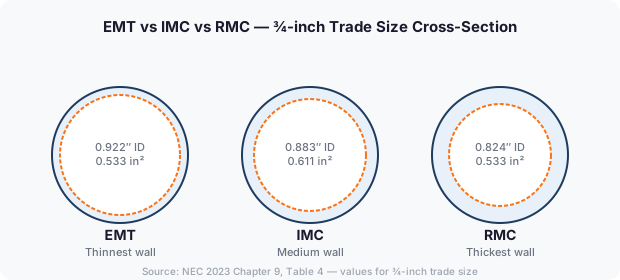
EMT (Electrical Metallic Tubing) has the thinnest wall of the three. A ¾-inch EMT has an 0.922-inch interior diameter and 0.533 in² of interior area. Thin walls make EMT the lightest and most bendable metallic conduit.
IMC (Intermediate Metal Conduit) sits between EMT and RMC in wall thickness. A ¾-inch IMC has a 0.883-inch interior diameter. Its wall is thicker than EMT but thinner than RMC, giving it better mechanical protection for moderate-risk installations.
RMC (Rigid Metal Conduit) has the thickest wall. A ¾-inch RMC has a 0.824-inch interior diameter and 0.533 in² of interior area - less interior space than ¾-inch EMT despite the same trade size. That smaller interior directly reduces the number of conductors you can run.
This matters for conduit fill. Run the same circuit through ¾-inch EMT vs ¾-inch RMC, and your fill percentage will be different - potentially the difference between a pass and a fail. Always use the correct conduit type when using our conduit fill calculator.
NEC Interior Areas at Common Trade Sizes
| Trade Size | EMT (in²) | IMC (in²) | RMC (in²) |
|---|---|---|---|
| ½-inch | 0.304 | 0.342 | 0.314 |
| ¾-inch | 0.533 | 0.611 | 0.533 |
| 1-inch | 0.864 | 0.959 | 0.887 |
| 1¼-inch | 1.496 | 1.647 | 1.526 |
Source: NEC 2023, Chapter 9, Table 4
Notice that IMC consistently offers more interior area than either EMT or RMC at the same trade size. If you need more capacity in a tight space, IMC can sometimes let you stay at a smaller trade size.
When to Use EMT
EMT is the standard choice for indoor commercial and residential wiring where:
Typical EMT applications: branch circuits in stud bays, above-ceiling runs, industrial control panels, commercial office buildouts.
EMT is not appropriate for direct burial, concrete encasement, or locations where it's subject to severe physical damage. Check NEC 358.10 for permitted uses and 358.12 for prohibited locations.
When to Use IMC
IMC is the right call when you need more mechanical protection than EMT without the weight penalty of RMC:
IMC threads just like RMC - you can use standard pipe threading dies. That threading capability makes field connections more flexible than EMT, which uses set-screw or compression fittings.
When to Use RMC
RMC is the heaviest and most expensive metallic conduit. Use it where:
RMC's main drawback is weight. ¾-inch RMC weighs about 1.45 lb/ft versus 0.8 lb/ft for EMT. On a 200-foot run with supports every 10 feet, that's a meaningful labor difference.
Bending Requirements
EMT bends easily with a hand bender. Most electricians bend ½-inch and ¾-inch EMT by hand and use mechanical benders for 1-inch and larger. The thin wall means you must use the correct shoe to avoid kinking.
IMC and RMC require the same bending technique but more force due to thicker walls. Mechanical and hydraulic benders are common for 1-inch and larger IMC and RMC. Both types can also be bent with standard pipe benders.
Kinking any metallic conduit reduces interior area at the bend, which can push fill over the limit at that point. A kinked ¾-inch EMT might have as little as 0.40 in² effective interior area - less than the 0.533 in² nominal. Check all bends visually and recalculate fill if any kinking occurred.
Cost Comparison
Approximate material costs at current pricing (2026):
For a 500-foot run, the material cost difference between EMT and RMC can exceed $600. Factor in the additional labor for RMC's heavier weight and threading requirements, and the gap grows further.
Use the cheapest conduit type the NEC permits for the installation location. Over-specifying conduit type on interior branch circuits is a common waste of job budget.
Code Compliance Summary
All three conduit types are listed in NEC Article 300 as permitted wiring methods. The right choice depends on the installation environment defined in the applicable articles:
Each article lists permitted and not-permitted uses, support spacing requirements, fitting types, and grounding considerations.
Before finalizing conduit type selection, confirm with your local AHJ (Authority Having Jurisdiction) if they've adopted local amendments. Some jurisdictions prohibit EMT in certain exposure conditions even where NEC might technically permit it.
For fill calculations across all three types at your specific trade size, use our NEC conduit fill calculator - it applies the correct Table 4 interior area values automatically based on conduit type.
For more on how conduit type affects your installation decisions, see our guide to sizing conduit for any wiring job and our PVC vs EMT comparison.
Conduit Fill Calculator Team
Electrical professionals building free, NEC-accurate conduit fill tools for working electricians, contractors, and inspectors.